
WoW Forever Talents: Talent Trees and Build Planning
Understand WoW Forever talent milestones, choose a build for your activity, and plan respecs without copying outdated Classic trees.
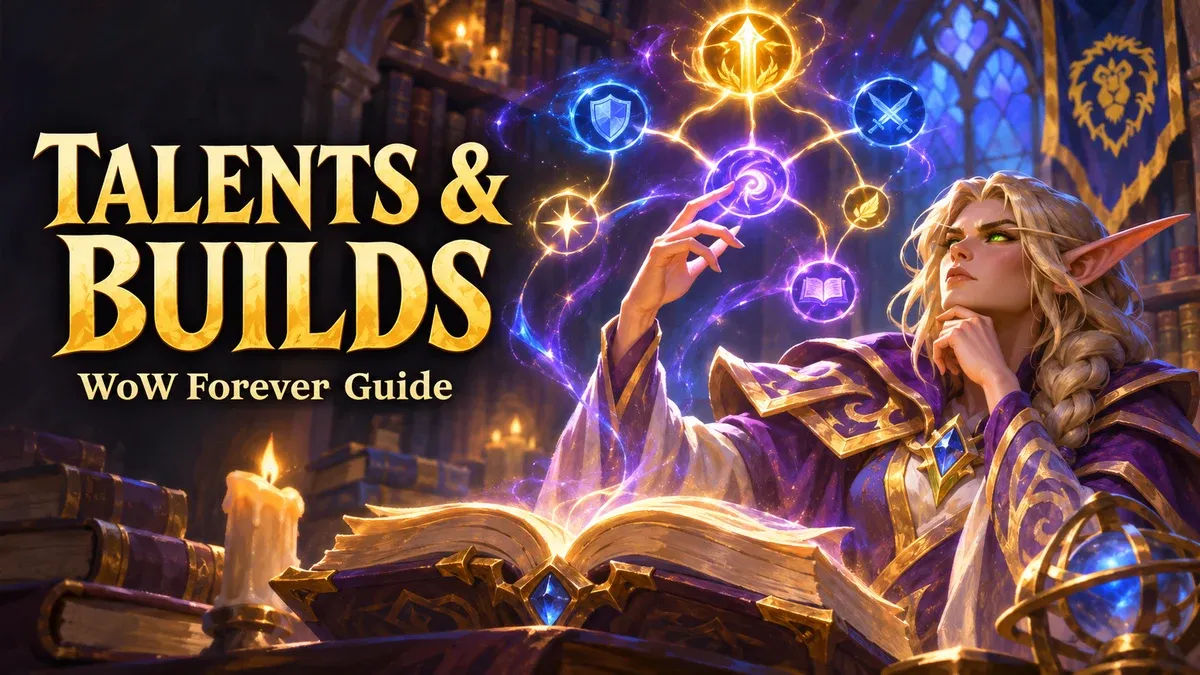
Editorial draft, researched November 12, 2026. Official announcements are linked beside the facts they support. Practical recommendations are editorial guidance; pending live-client checks are listed below.
How should you plan a talent tree?
Start with one job for your build: quest comfortably, deal damage in a group, heal, or tank. A talent that improves a spell you rarely cast can be less useful than a smaller improvement to your regular toolkit. The planning method below is an editorial recommendation, not a simulated best-in-slot build.
What has Blizzard confirmed?
Talents begin at level 10. Blizzard describes milestone talents at 11, 16, 21, and 31 points invested in a tree. These are point milestones, not character levels. Some formerly talented class buffs are now baseline. Blizzard’s Hunter and Druid deep dive explains the structure; it was a pre-launch overview and should be checked against current tooltips.
Which choices deserve points first?
| Your immediate problem | What to inspect in the tree | How to test the choice |
|---|---|---|
| Frequent recovery breaks | Resource efficiency and recovery | Compare several similar pulls, including downtime |
| Dying to extra enemies | Defensive tools and control | Practice escaping an accidental extra pull |
| Missing a group role | Role-defining abilities | Test the intended job in an appropriate group |
| Losing damage while moving | Instant or movement-friendly tools | Compare a moving encounter with a stationary one |
Do not spread points between trees just because every first row looks attractive. Trace a route to your next useful milestone, including prerequisites, before selecting optional bonuses.
How do you compare two builds fairly?
- Save a screenshot of the existing tree and note your character level.
- Keep gear, enemy type, and consumables similar.
- Change one cluster of talents rather than everything at once.
- Record survival, resource use, and completion time.
- Keep the build that solves your actual bottleneck.
For an initial role choice, use the class selection guide. Read the dual specialization guide before planning two loadouts. Profession decisions belong in the profession guide, rather than being assumed to fix a weak talent setup.
What still needs verification?
Exact point-by-point leveling builds, import codes, and current numerical talent values need a live-client review. This draft does not claim that a particular allocation is optimal. Class talents and Legacy talents are separate systems; avoid spending one system’s points as though they belonged to the other.
Related Articles
classes
WoW Forever Classes: How to Choose Your First Class
Choose a WoW Forever class by preferred role, combat style, pet management, and group responsibilities rather than an unverified DPS ranking.
classes
WoW Forever Hunter Leveling Guide: Talents, Pets and Pulls
Start leveling a Hunter in WoW Forever with a Beast Mastery learning plan, pet-control checklist, combat priorities, and dungeon preparation.
classes
WoW Forever Paladin Leveling Guide: Seals, Talents and Mana
Plan Paladin leveling in WoW Forever with seal and Judgement basics, early talent priorities, mana budgeting, weapon checks, and role preparation.
Was this helpful?
Thanks for the feedback!